


Introduction: Reimagining Finance in a Trustless Digital World
For centuries, the global financial landscape has been dominated by powerful, centralized intermediaries: commercial banks, investment firms, and huge clearinghouses. These institutions act as essential gatekeepers, controlling everything from lending and borrowing to trading and asset custody. While these established systems provide necessary stability and legal recourse, they inherently suffer from significant drawbacks. They are often opaque, slow to innovate, geographically restrictive, and charge substantial fees for their services. Furthermore, they are susceptible to systemic risks, relying heavily on human trust and regulation, which history has shown can often fail, leading to financial crises that disproportionately harm the less powerful. Access to these services is also highly unequal, leaving billions of people worldwide underserved or completely excluded from the global financial system simply due to their location or lack of formal documentation.
The advent of programmable blockchains, most notably Ethereum, introduced a radical, transformative alternative: Decentralized Finance, or DeFi. This movement seeks to tear down these traditional gates, offering financial services that operate transparently, globally, and autonomously, entirely powered by code. DeFi utilizes smart contracts—self-executing digital agreements—to replace the functions historically performed by human bankers and lawyers. This technology allows users to interact directly with financial protocols on a peer-to-peer basis, eliminating the need for trust in a centralized company.
This shift is not merely an improvement on existing banking; it is a fundamental architectural change that promises to create an open, permissionless, and highly efficient global financial system. By delving into the mechanisms of DeFi, we explore how lending, borrowing, trading, and saving can all be managed through automated protocols, accessible to anyone with an internet connection, effectively fulfilling the promise of “banking without banks” in the modern digital era. This revolutionary concept is rapidly reshaping economic participation worldwide.
Section 1: The Foundations of Decentralized Finance
To truly understand DeFi, one must appreciate the core technological pillars that differentiate it from traditional financial services (TradFi). These foundations are all rooted in the security and transparency of the blockchain.
The Role of Programmable Blockchains
DeFi is built almost entirely on blockchains that support smart contracts, as simple cryptocurrency ledgers like Bitcoin lack the necessary execution environment for complex financial logic. Ethereum pioneered this capability, creating the platform upon which the movement was launched.
A. Smart Contracts as Intermediaries: Smart contracts are the core technology, acting as automated, trustless escrow agents, market makers, and vaults. They hold and manage the assets and the rules of the financial agreement.
B. Global State: The underlying blockchain provides a guaranteed, synchronized global state. Every participant agrees on the current balance, ownership, and collateralization status of all assets, eliminating disputes over who owns what.
C. Permissionless Access: Unlike a bank that requires an account and verification, DeFi protocols only require a compatible digital wallet. Anyone, anywhere, can interact with the contracts without needing permission or approval.
Native Digital Assets and Composability
DeFi relies on native digital assets—cryptocurrencies, stablecoins, and tokenized assets—to operate. The ability of these tokens to interact seamlessly is known as composability.
A. Token Standards (ERC-20): Most assets used in DeFi adhere to a standard, such as Ethereum’s ERC-20. This standard dictates how tokens are created, tracked, and transferred, making them instantly compatible with every other protocol on that blockchain.
B. Money Legos: Composability allows developers to build new financial products by stacking and combining existing protocols like digital “money legos.” For example, a user can borrow from one protocol, stake the borrowed asset in a second protocol, and insure it using a third, all simultaneously.
C. Stablecoins: Crucial for DeFi, stablecoins are cryptocurrencies pegged to the value of a fiat currency (usually the US Dollar). They provide the necessary stability for lending, borrowing, and trading that volatile cryptocurrencies cannot offer.
The Importance of Decentralization
Decentralization is the philosophical and structural element that prevents any single party from shutting down or censoring the financial protocol. The entire system is built for resilience.
A. Censorship Resistance: Since the smart contract code is running on a distributed network of thousands of nodes, no single government or corporation can unilaterally halt its operation or interfere with a user’s access to their funds.
B. Transparency: Every transaction, every collateral ratio, and every line of contract code is publicly verifiable on the blockchain. This radical transparency builds trust in the system’s objective function.
C. Open Source Development: The code for DeFi protocols is typically open source, meaning any developer can audit it for bugs or malicious backdoors, ensuring collective security through scrutiny.
Section 2: DeFi’s Core Financial Services
DeFi protocols have successfully replicated and, in many ways, improved upon the most common functions of traditional banking. These services are the primary drivers of the DeFi economy.
A. Decentralized Trading (DEXs)
Decentralized Exchanges (DEXs) allow users to trade digital assets directly from their wallets, without ever depositing funds into a centralized exchange, thus eliminating the critical custodial risk.
A. Automated Market Makers (AMMs): Unlike traditional exchanges that use an order book of buyers and sellers, most modern DEXs use AMMs. These protocols rely on liquidity pools—funds contributed by users—to facilitate instant, automated trades using a mathematical algorithm.
B. Liquidity Providers (LPs): Users who contribute their assets (often a pair of tokens like ETH and USDC) to a liquidity pool are known as LPs. They earn a proportional share of the trading fees generated by the pool in exchange for providing the necessary capital.
C. Non-Custodial Trading: The key benefit is that users maintain custody of their private keys and their assets at all times. They only interact with the smart contract, never relinquishing control to a third party.
B. Lending and Borrowing Protocols
These protocols facilitate the core function of banking: allowing users to earn interest on their deposits and take out loans without needing a bank to match them.
A. Collateralized Loans: Almost all DeFi loans are over-collateralized. A borrower must typically deposit more value (e.g., $150 worth of Ether) than the amount they wish to borrow (e.g., $100 worth of stablecoins) to ensure repayment security.
B. Interest Rate Automation: Interest rates are not set by a committee; they are determined algorithmically based on the supply and demand within the protocol’s liquidity pools. High demand for borrowing a certain asset automatically increases the interest rate for depositors of that asset.
C. Liquidation Mechanism: If the value of the collateral falls too close to the borrowed amount, the smart contract automatically liquidates the collateral. This process is immediate, protecting the lenders from losses and enforcing repayment without requiring legal action.
C. Yield Farming and Staking
These terms describe the various ways users can put their idle crypto assets to work to generate passive returns, often exceeding those available in traditional bank savings accounts.
A. Yield Farming: This complex process involves moving assets between different DeFi protocols to maximize returns. For example, depositing stablecoins into a lending protocol and using the resulting tokenized deposit receipt as collateral in a second protocol.
B. Staking: In Proof-of-Stake (PoS) blockchains, users can “stake” their tokens to secure the network and validate transactions. In return for this service, they earn newly minted tokens and transaction fees, which is a form of passive yield.
C. Incentive Tokens: Many new protocols offer additional governance tokens as rewards to LPs and depositors. These tokens not only provide further yield but also grant the user voting rights in the protocol’s future direction.
Section 3: The Architecture of DeFi Protocols

The robustness and security of the DeFi ecosystem stem from the careful design and layering of smart contracts, which function together like complex, automated financial machinery.
Smart Contract Audits and Security
Since code is law in DeFi, the security of the smart contract is paramount. A single bug can lead to the loss of millions of dollars, as demonstrated by early protocol exploits.
A. Public Audits: Before deployment, reputable DeFi protocols undergo rigorous security audits by specialized, independent firms. These audits check the code for known vulnerabilities and economic flaws.
B. Bug Bounties: Many protocols offer substantial financial rewards (bug bounties) to ethical hackers and security researchers who responsibly discover and report vulnerabilities before they can be maliciously exploited.
C. Time Locks and Multi-Sig Wallets: To prevent rogue developers from draining funds or making sudden, unapproved changes, most major protocols lock critical administrative functions using time delays (time locks) or require multiple, independent key holders to sign off on a transaction (multi-signature wallets).
Oracles: The Data Connection
As discussed previously, smart contracts need reliable external data—such as asset prices—to execute correctly. This data is fed into the contract by decentralized Oracles.
A. Price Feeds: Lending protocols must know the real-time market price of an asset to calculate collateral ratios and initiate liquidations accurately. This essential data is provided by decentralized Oracle networks (e.g., Chainlink).
B. Decentralized Data Sourcing: Oracle networks source price data from multiple, diverse exchanges and aggregate them through consensus. This makes it prohibitively expensive for a single malicious entity to manipulate the price data that the smart contract relies on.
C. The Garbage In, Garbage Out Risk: Despite decentralized Oracles, the system is only as good as the data it receives. If the Oracle data is fundamentally flawed, the resulting contract execution will be flawed, demonstrating the persistent importance of accurate data.
Governance and Decentralized Autonomous Organizations (DAOs)
The core principle of DeFi is decentralization, which extends to the management of the protocols themselves. Decisions are made by the community, not a corporate board.
A. Token Holder Voting: Users who hold a protocol’s governance tokens can vote on proposals that affect the system, such as changing interest rate models, adjusting collateral factors, or approving new asset listings.
B. On-Chain Execution: Once a proposal receives a majority of votes, the smart contract code automatically executes the changes without requiring any human intervention. The governance is literally written into the code.
C. Community Engagement: This structure fosters deep community involvement, as users are financially and politically invested in the success and security of the protocols they use, creating a highly participatory financial ecosystem.
Section 4: Risks and Challenges in the DeFi Landscape
While DeFi offers revolutionary benefits, it is a nascent and complex space that carries unique and often unforgiving risks that are fundamentally different from those in traditional finance. Users must approach the ecosystem with extreme caution.
Smart Contract Risk
The single greatest threat remains the risk of a vulnerability in the underlying smart contract code itself. This is often an uninsurable risk, as the loss is instantaneous and irreversible.
A. Exploitable Code: Despite audits, unforeseen bugs or logical errors can be exploited by hackers, leading to the permanent draining of funds from the protocol’s liquidity pools.
B. Immutability Trap: The immutability of the code means that once a critical bug is deployed, it often cannot be easily fixed without complex, controversial upgrades, sometimes requiring a difficult fork of the protocol.
C. Economic Exploits: Even perfectly coded contracts can be exploited through economic manipulation, such as flash loan attacks, where an attacker temporarily borrows a massive amount of capital to manipulate the price of an asset for profit.
Regulatory and Centralization Risks
The lack of traditional regulation in DeFi creates a Wild West environment, and subtle centralization points still exist in many protocols. This lack of clear rules poses a risk to institutional adoption.
A. Regulatory Uncertainty: Global governments are still figuring out how to classify and regulate DeFi protocols. Sudden regulatory actions, particularly against stablecoin issuers or custodial interfaces, could disrupt the market rapidly.
B. Front-End Centralization: While the back-end smart contracts are decentralized, most users interact with them via centralized websites (front-ends). If a government shuts down that website, access can be temporarily severed, even if the contracts remain running.
C. Key Holder Risk: Protocols using multi-signature wallets for administrative functions are only as decentralized as the small group of key holders. If those few key holders are compromised or coerced, the protocol can be manipulated.
Impermanent Loss and Asset Volatility
DeFi exposes users to unique financial risks, particularly when providing liquidity to AMMs. The volatility of crypto assets interacts with the protocol logic to create new types of financial loss.
A. Impermanent Loss (IL): This is the risk incurred by LPs when the price of the two tokens in a liquidity pool changes dramatically relative to each other. The loss represents the difference between holding the tokens in the pool versus simply holding them in a wallet.
B. Liquidation Risk: Borrowers who post volatile crypto assets as collateral face the risk of instant liquidation if the market price of their collateral suddenly drops. This often results in the borrower losing their collateral at a discount.
C. Gas Price Volatility: Network congestion can cause Gas fees to skyrocket. This can prevent users from quickly adjusting their collateral or participating in a liquidation event, locking them out of managing their own risk.
Conclusion: The Future of Permissionless Financial Access
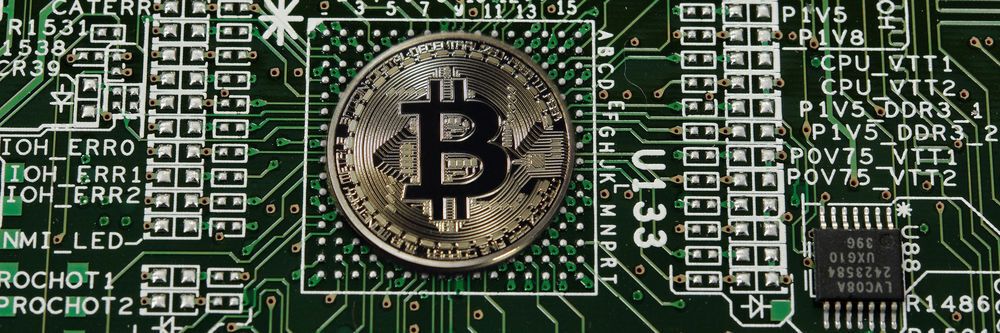
Decentralized Finance is an unstoppable, ongoing financial experiment that fundamentally re-architects how economic activities can be executed globally, removing the historical reliance on centralized banks and institutions. By substituting human trust with transparent, self-executing code, DeFi has created a robust, efficient, and permissionless parallel financial system.
The core of this system is the smart contract, which automates lending, trading, and asset management on a global scale.
DeFi offers unparalleled accessibility, allowing any individual with internet access to participate fully in sophisticated financial markets regardless of their geographical location or social status.
Decentralized exchanges and automated market makers have revolutionized trading by eliminating custodial risk and ensuring liquidity through algorithmic pools.
The integration of decentralized Oracles provides the critical external data needed, ensuring that automated contracts can accurately respond to real-time market conditions.
While the ecosystem remains susceptible to the unforgiving risk of smart contract bugs and regulatory uncertainty, its open-source nature drives continuous, rapid security improvements.
Ultimately, DeFi provides a compelling glimpse into a financial future that is radically transparent, algorithmically fair, and entirely controlled by the code and the community, not by corporate executives.