

Introduction: The Centralized Walled Garden of Traditional Gaming
For decades, the video game industry has operated under a highly centralized model, where immense power and ownership are concentrated in the hands of major studios and publishers. Players spend countless hours, often thousands of dollars, acquiring in-game items, character skins, and virtual currencies, yet they never truly own these digital assets. Everything is locked within the game’s ecosystem—a classic example of a “walled garden”—and the moment a game is shut down, or a player is banned, all that time, money, and perceived value instantly vanishes. The developers maintain absolute control over the game’s economy, dictating prices, distribution, and even the ability of players to transfer their hard-earned items. This structure meant that players were simply consumers, renting temporary enjoyment and assets from the publishers, with zero financial return on their effort and investment.
The frustration over this custodial relationship, coupled with the rising capability of blockchain technology, paved the way for a radical paradigm shift in the digital entertainment landscape. Crypto gaming, specifically the Play-to-Earn (P2E) model, challenged this traditional architecture head-on. P2E utilizes the principles of decentralization, asset tokenization, and transparent digital ownership to transform players from mere consumers into genuine stakeholders in the game’s ecosystem. It introduces real-world economic incentives for in-game activities, offering a revolutionary path for players to derive tangible financial value from their time and effort.
This new model is powered by Non-Fungible Tokens (NFTs) and fungible cryptocurrencies, which grant verifiable, secure, and transferable ownership over digital assets. By replacing the traditional server-based economy with a decentralized blockchain economy, P2E gaming is not just about entertainment; it’s about financial empowerment. This detailed exploration will dissect the fundamental mechanics, economic drivers, and disruptive potential of the Play-to-Earn revolution, demonstrating how this innovative fusion of finance and fun is changing the very definition of digital labor and ownership.
Section 1: The Foundations of the Play-to-Earn Model
The P2E model relies on the seamless integration of blockchain technology to create an open, transparent, and economically viable environment for digital assets.
Blockchain as the Economic Infrastructure
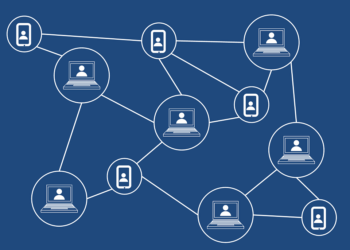
Unlike traditional games where the database is managed by the central studio, P2E games utilize a public, decentralized blockchain to record all asset ownership and major transactions.
A. Immutable Asset Registry: The blockchain acts as a public, tamper-proof ledger, recording who owns which digital item (NFT) at any given moment. This makes ownership undeniable and transparent.
B. Decentralized Transactions: All in-game transactions, such as the transfer of a rare item or the sale of a digital land plot, are settled on the blockchain. This removes the need for a central payment processor or exchange.
C. Smart Contract Logic: The economic rules of the game—how an item is minted, how many tokens are rewarded for a victory, or the royalty percentage on a sale—are written into smart contracts. This ensures fair, automated, and trustless execution of the game’s economy.
NFTs: The Key to True Digital Ownership
The P2E model hinges entirely on the use of Non-Fungible Tokens (NFTs), which are the cryptographic certificates that grant verifiable ownership over unique in-game items.
A. Unique Assets: NFTs represent unique digital items like character avatars, special weapons, cosmetic skins, virtual pets, or plots of virtual land. Each is distinct and cannot be replicated.
B. Transferable Value: Because the asset is owned via a smart contract on the blockchain, players can freely transfer, sell, or trade their NFTs outside of the game’s native marketplace, using third-party decentralized exchanges.
C. Utility and Scarcity: The value of a P2E NFT is tied directly to its utility within the game (e.g., a weapon that grants a combat bonus) or its verifiable scarcity, which is enforced by the contract’s minting rules.
Fungible Tokens: The In-Game Currency
Most P2E games utilize a fungible cryptocurrency, often adhering to the ERC-20 standard, to serve as the liquid medium of exchange and reward system within the ecosystem.
A. Reward Mechanism: Players earn this fungible token (e.g., SLP in Axie Infinity) by completing daily tasks, winning battles, or fulfilling in-game quests. This token is the primary financial incentive.
B. Economic Function: The token is used for in-game expenses, such as repairing items, breeding new characters, paying transaction fees, or upgrading virtual buildings, making it the lifeblood of the economy.
C. External Exchange: Since the token is a standard cryptocurrency, players can sell it on external decentralized or centralized exchanges, converting their in-game earnings directly into fiat currency or other crypto assets.
Section 2: Mechanics of Earning in the P2E Model
The “Earn” component of the P2E model is realized through several key activities that transform playtime into economic output.
A. Earning Through Active Gameplay
The most straightforward way to earn is through direct, skillful gameplay that contributes to the game’s competitive or cooperative ecosystem.
A. Completing Quests and Battles: Players are rewarded with the game’s fungible token for winning matches, defeating enemies, or accomplishing daily challenges, creating a direct value exchange for their time.
B. Competitive Ranking: Higher rankings in seasonal leagues or tournaments often yield larger token rewards and exclusive, high-value NFTs, incentivizing competitive dedication and skill development.
C. Resource Gathering: In virtual world or simulation games, earning can involve gathering in-game resources (wood, metal, magical elements) that are tokenized and then sold to other players or the game’s smart contract.
B. Earning Through Asset Creation (Crafting)
Players can utilize their skills, gathered resources, and token rewards to create new, valuable assets for the community.
A. Minting New NFTs: Using fungible tokens and unique existing NFTs, players can “breed” new characters or “craft” powerful new weapons, minting a new NFT onto the blockchain, which can then be sold for profit.
B. Content Creation: In certain platforms, players can design and create unique cosmetic items or even entire mini-games. When these creations are sold or played, the original creator earns a portion of the revenue, facilitated by smart contract royalties.
C. Upgrading and Improving Assets: By expending time and tokens, players can permanently upgrade the statistical power or visual rarity of an existing NFT. This adds verifiable value to the asset, making it more desirable and profitable when sold.
C. Earning Through Virtual Land Ownership
In many metaverse-style P2E games, virtual land is a highly coveted and valuable NFT asset that generates passive income streams for its owner.
A. Renting Digital Property: Landowners can rent out their virtual land plots to other players who want a space for building, farming, or setting up virtual shops, earning rental fees in the game’s fungible token.
B. Hosting Events and Advertisements: Land can be monetized by hosting popular in-game events, setting up advertising billboards, or charging fees for other players to harvest resources located on the property.
C. Governance and Staking: Owning virtual land or core NFTs often grants the player the right to stake the asset, allowing them to earn passive rewards in exchange for helping to secure the game’s economic governance.
Section 3: The Economic Structure of P2E Games

Unlike traditional games where value flows one way (from player to publisher), P2E economies aim for a complex, self-sustaining loop that rewards participation.
The Two-Token Economy Model
Many of the largest P2E games utilize a dual-token system to manage stability, incentivize participation, and decentralize governance.
A. The Utility Token (Reward Token): This high-supply token is earned primarily through gameplay. It is intentionally inflationary (new tokens are constantly minted as rewards) and serves as the immediate incentive and medium for in-game expenses.
B. The Governance Token (Investment Token): This is the hard-capped, low-supply token. It acts as the investment layer, granting holders voting rights in the game’s Decentralized Autonomous Organization (DAO) and often providing staking rewards.
C. Economic Balance: The health of the P2E economy depends on balancing the inflation of the utility token (the EARN side) with sufficient deflationary mechanisms (the SPEND side), such as burning tokens for expensive upgrades or breeding costs.
DAO Governance and Decentralization
A key philosophical shift is the decentralization of control. As protocols mature, decision-making power is transferred from the game studio to the token-holding community.
A. Token Holder Voting: Players who hold the game’s governance token can vote on critical proposals, such as adjusting reward rates, changing in-game fees, or launching new features.
B. Community Alignment: This structure ensures that the game’s development and economic decisions are aligned with the long-term interests of the people who are financially invested in the ecosystem (the players/investors).
C. Protocol Treasury: Many P2E games collect fees from marketplace sales and in-game transactions, which are stored in a community-controlled treasury. The DAO votes on how these funds should be spent, furthering decentralization.
Section 4: The Impact of P2E: Economic and Societal Change
The rise of P2E gaming has had profound real-world consequences, most notably in developing nations where it has emerged as a viable source of primary income.
Economic Opportunity in Developing Nations
P2E has created entirely new economic micro-industries, providing income that can significantly exceed local minimum wages in many parts of the world.
A. Primary Income Source: In countries like the Philippines and Indonesia, players have earned life-changing income from P2E games like Axie Infinity, often using the earnings to pay for education, rent, and necessities.
B. The Metaverse Job Market: New job roles have emerged, including “scholars” (players who rent NFTs from owners to earn a revenue split) and “guild managers” (who manage large groups of scholars and optimize earning strategies).
C. Financial Inclusion: For individuals who lack access to traditional banking systems, P2E provides a seamless, borderless on-ramp into the digital economy, requiring only a smartphone and an internet connection to participate.
The Concept of Digital Labor
P2E games fundamentally shift the perspective on the value of a player’s time and effort, formalizing the concept of digital labor into a quantifiable, monetary asset.
A. Value Retention: Unlike traditional gaming where time spent translates only to entertainment, P2E ensures that time spent directly contributes to the creation or acquisition of a verifiable, sellable asset.
B. Ownership of Effort: The value created by the player’s effort—leveling up a character or acquiring a rare item—remains the player’s property, not the publisher’s, cementing the player’s position as a digital laborer.
C. Shift in Power Dynamics: This economic realization grants players greater power over the publisher. If a publisher makes an unfavorable economic decision, players can simply sell their assets and move to a competing game, taking their economic contribution with them.
Section 5: Risks and Sustainability Challenges
Despite the revolutionary potential, the P2E sector is highly volatile, speculative, and faces significant challenges to achieve long-term economic sustainability.
A. Economic Model Sustainability
The greatest challenge facing P2E games is maintaining a long-term economic balance that ensures the rewards paid out do not exceed the value flowing back into the system.
A. Inflationary Pressure: P2E reward tokens are inherently inflationary. If the rate at which new tokens are minted (EARN) consistently outpaces the rate at which tokens are burned (SPEND), the token’s value will decline rapidly.
B. Ponzi-like Dynamics: Many early P2E games relied heavily on attracting new players and investment capital to pay out rewards to existing players. When the influx of new users slows, the model becomes unsustainable, leading to token price collapse.
C. Demand for the Utility Token: Long-term sustainability requires strong demand for the utility token within the game (e.g., breeding, crafting, and upgrading). If players only earn and sell, the economy will inevitably spiral downward.
B. High Barrier to Entry (Capital Requirement)
Ironically, many P2E games create a new form of financial exclusion by requiring players to purchase expensive NFT assets just to begin playing and earning.
A. Initial Investment Cost: The cost of the necessary entry-level NFTs (e.g., a starter team of characters) can often run into the hundreds or thousands of dollars, making it inaccessible to the average user in developing nations.
B. The Scholar System: This high entry barrier fueled the creation of the Scholarship System, where NFT owners rent their assets to players in exchange for a revenue split. While solving accessibility, this introduces a new intermediary layer.
C. Exclusionary Effect: The necessity of large upfront investment contradicts the initial promise of financial inclusion, forcing players into a rent-seeking relationship with wealthy asset owners.
C. Regulatory and Technical Risks
P2E games are subject to the same regulatory uncertainty and technical risks as the broader decentralized finance and NFT spaces.
A. Smart Contract Risk: The in-game NFTs, tokens, and reward mechanisms are governed by complex smart contracts. A single, undiscovered bug can be exploited by hackers, leading to the theft of millions of dollars worth of assets.
B. Security Classification: Governments may decide that P2E game tokens and certain NFTs (especially those tied to passive revenue streams) are unregistered securities, leading to potential platform shutdowns or restrictions.
C. The “Fun” Factor: If a game prioritizes financial incentives over engaging and fun gameplay, it risks losing its core player base once the token value drops or better-paying games emerge, causing the entire economy to collapse due to lack of organic demand.
Section 6: Future Trends and Evolution of P2E
The P2E model is rapidly maturing, moving past simple token economies toward more complex, sustainable, and high-quality gaming experiences.
The Emergence of AAA-Quality P2E
The industry is seeing significant investment flowing into developing games that offer the graphics, narrative, and depth expected of traditional AAA (Triple-A) titles.
A. Graphical Fidelity: Future P2E titles are expected to compete directly with major console and PC games in terms of graphical quality and immersive design, attracting a broader base of traditional gamers.
B. Sustainable Models: New games are focusing on economic models that tie asset value to a fixed resource burn or verifiable deflationary mechanisms, making the economy less reliant on continuous new user inflow.
C. Free-to-Play On-Ramps: Many new projects are adopting a “Free-to-Play, Optional-to-Earn” model, allowing players to start playing for free and only requiring an NFT investment when they want to start monetizing their time.
Interoperability and Open Metaverse
The ultimate vision for crypto gaming involves a truly interconnected digital world where assets can move seamlessly between different games and platforms.
A. Cross-Game Utility: Future NFTs are designed to have utility across multiple games. For example, a character skin owned in one game might be usable as a collectible in another or provide a statistical bonus in a third.
B. Identity and Avatars: The NFT is evolving into the user’s permanent digital identity or avatar, representing their persona and accumulated history across the open metaverse—a network of virtual worlds.
C. Decentralized Intellectual Property (IP): Some projects are experimenting with giving the NFT owners, not just the original studio, partial commercial rights to the IP, allowing them to monetize their characters or assets outside of the game.
Conclusion: The New Dawn of Digital Ownership

The Play-to-Earn model is a revolutionary force that transcends mere entertainment, fundamentally redefining the relationship between players and digital assets. By anchoring in-game items and currency to the blockchain, P2E ensures verifiable ownership and creates tangible economic value for a player’s time and skill.
P2E transforms players from passive consumers into active, financially incentivized stakeholders in the game’s success and economy.
The system relies on NFTs to guarantee unique, sellable ownership of digital items and fungible tokens to act as the liquid, earnable medium of exchange.
This model provides significant real-world economic opportunities, particularly for communities in developing nations where earnings can become a primary source of income.
The stability of the entire ecosystem is constantly challenged by the need to maintain a careful balance between the inflationary reward token and the necessary in-game spending mechanisms.
The industry is rapidly evolving toward high-quality, sustainable AAA-style games, incorporating free-to-play options to lower the historically high barrier to entry.
Ultimately, P2E gaming is paving the way for a digital future where time spent creating value in the virtual world is finally recognized and rewarded in the real one.